The first time I sutured, a nurse was there to teach me.
The first time I placed an IV, a nurse was there to steady my hand. The first time I intubated, a nurse was beside me. And the first time I felt unsure with a case, as a young medical intern, a nurse carried me through it and steadied me with her experience.
I am a physician, and if I am honest about how I learned to practise, I owe a large part of it to nurses. Much of the clinical judgment I trust in myself was shaped, corrected, and rescued by nurses who knew more than I did about the thing in front of us, and had the grace to teach me without ever making me feel the gap.
The profession we quietly depend on
Medicine tells its history, unevenly, through physicians. But the person at the bedside, the one who notices the patient turning before the monitor does, the one who questions the dose, who catches the wrong drug before it is given, who holds the whole floor in their head through a twelve hour shift, is almost always a nurse.
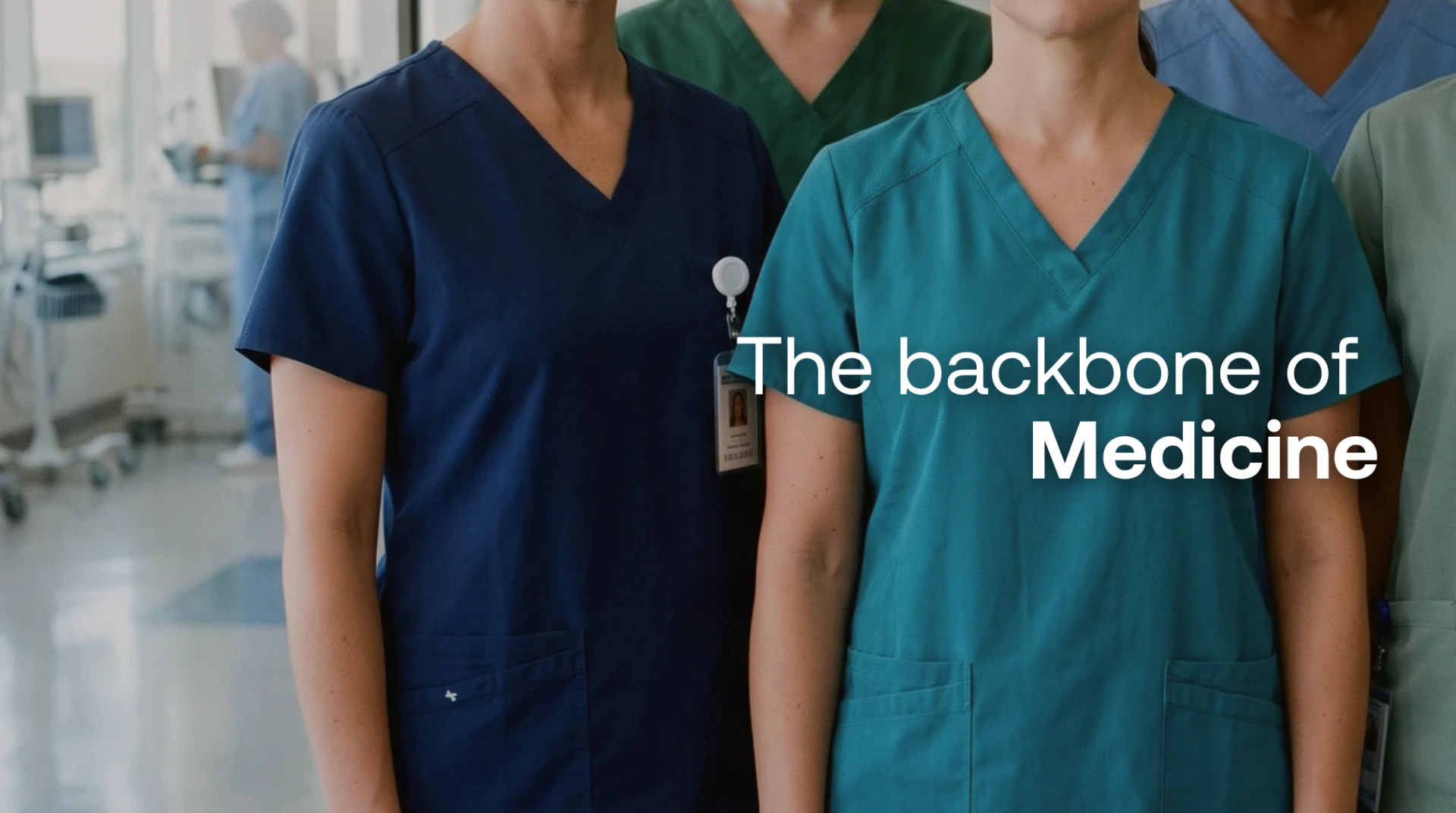
Nurses are where medical accuracy actually lives. The research is unambiguous: better nurse staffing and better nurse judgment mean fewer deaths, fewer failures to rescue, fewer errors reaching the patient. They are the structure holding the true process of healthcare together.
And when you look at the history of medicine, nurses have invented, reformed, and led.
The nurses who changed medicine
When we talk about nurses, everyone talks about Florence Nightingale. She was great, no doubt. But she seems to be the only nurse we ever name, and that is not because she was the only one who mattered. It is because most of us know almost nothing about the history of nurses. So today we are not going to talk about her. We are going to talk about the others, the women and men whose names never made it onto the same pedestal, and who changed medicine anyway.
Anita Dorr, the nurse inventor
An emergency nurse who spent years watching precious seconds lost as staff scrambled for equipment during a crisis. In 1968 she built the answer in her own basement: a wheeled cart, organised so the right tools were always within reach at the bedside. She called it the crisis cart. Today it is the crash cart, standard in every emergency department on earth. She went on to co-found the Emergency Nurses Association. The tool that saves lives when a heart stops was designed by a nurse who was tired of watching time run out.
Clara Barton, the nurse founder
She nursed soldiers through the American Civil War, often bringing supplies to the front lines herself, and then founded the American Red Cross, building an institution of humanitarian care that still saves lives on every continent today.
Mary Eliza Mahoney, the nurse advocate
Born to formerly enslaved parents, she worked for fifteen years as a janitor, cook, and washerwoman at the New England Hospital for Women and Children before she was admitted to its nursing program. In 1879 she became the first Black woman in the United States to earn a professional nursing licence. She went on to co-found the National Association of Colored Graduate Nurses and spent her life forcing the profession open to those who came after her. History remembers her as one of the most tenacious and selfless figures nursing has ever produced.
Lawrence C. Washington, the nurse officer
He began as an Army medical aidman and rose, over a career that spanned five decades, to the rank of colonel. In 1967 he became the first male nurse ever commissioned into the Regular Army Nurse Corps, and later the first African American man to reach colonel within it. He led psychiatric nursing, taught the next generation at Howard and the University of Maryland, and served as chief of nursing at Army medical centers in Germany and the United States.
Rebecca Love, the nurse of tomorrow
The lineage does not stop in the past. It runs straight into the present. Rebecca Love, RN, MSN, FIEL, is one of the most influential voices in nursing in the world. She was the first nurse ever featured on TED.com, and the first Director of Nurse Innovation and Entrepreneurship in the United States, where she founded the Nurse Hackathon and began teaching nurses to build the solutions the system needs. She founded SONSIEL, the Society of Nurse Scientists, Innovators, Entrepreneurs and Leaders, now a United Nations affiliated organisation. She founded the Commission for Nurse Reimbursement, confronting one of the great structural injustices in healthcare, that nurses, alone among degreed clinicians, are treated as a cost rather than a billable source of care. Her entire career has been an argument that nursing is not a supporting act. It is the heart of healthcare innovation.
She is the living proof of everything this history shows. The nurse who invents, who leads, who forces the door open, who builds what the system is missing.
This is what the profession has always been. A home for leadership, for innovation, and for a deep love of medicine.
Why this matters now
Healthcare is being remade again, this time by data and by AI. There is a familiar risk in these moments: that the people closest to the patient are the last ones consulted about the tools built to help them. It has happened before, when systems were designed for clinicians without asking them, and it produced software that added burden instead of removing it.
We do not intend to make that mistake with nurses. If nurses are the backbone of medicine, and the evidence says they are, then the future of medicine cannot be built without them at the table.
Rebecca Love joins the Lapsi Health advisory board
This is why we are proud to welcome Rebecca Love to the advisory board of Lapsi Health, the company behind Keikku.
Nurses carry the earliest, most reliable signals in patient care, the subtle changes they notice hours before a chart reflects them. Yet our documentation systems, our clinical evidence base, and our diagnostic tools were never designed to capture that nursing knowledge. Our current systems were built to record outcomes, not to support the thinking and knowledge that delivers care. Our diagnostic tools still treat nursing judgment as something to transcribe rather than something to build around. Keikku is the first company I've seen trying to fix that at the root, starting with the real cognitive work nurses do instead of just transcribe the forms they fill out. That's exactly why I joined their Advisory Board.
Rebecca Love, RN, MSN, FIEL
Her voice will help ensure that the nurse is a designer of our platform, and that the tools we build reduce the burden nurses carry rather than adding to it. There is no future of healthcare without nurses. We are honoured to build ours with one of the profession's most important leaders at our side.
Welcome, Rebecca.