Every conversation about Artificial Intelligence (AI) in medicine eventually fixates on the model. Which algorithm, which architecture, which benchmark score. But there is a quieter truth that every working clinical AI system obeys, and it is the oldest rule in computing: garbage in, garbage out. The most sophisticated model in the world is only ever as good as the data it is given. In medicine, that data is not scraped from the internet. It is captured from a real patient, in a real room, in a single moment that does not come again. The quality of that capture is the ceiling on everything the AI can do afterward. Look across the three most important diagnostic AI domains and the same lesson appears every time.
By Jhonatan Bringas Dimitriades, MD | Augmented by Keikku AI
Radiology: the model cannot see what the image did not capture
Radiology AI is the most mature diagnostic AI in clinical use, and it is also the clearest demonstration of the data-quality ceiling. A deep learning model reading a scan can only reason over the pixels it is handed. If the acquisition is degraded, the intelligence downstream inherits the degradation.
This is well documented. A cross-sectional study of suspected stroke patients undergoing brain Magnetic Resonance Imaging (MRI) examined how motion artifacts affected diagnosis, and assessed the impact on both radiologists and a commercial deep learning tool. Motion in the scan degraded diagnostic accuracy, and the AI was not immune to it. The broader literature is unambiguous on the principle: as one review of AI in radiology puts it, the accuracy of AI heavily depends on the quality of the data, and poor-quality data can lead to incorrect diagnoses with serious consequences for patient care. Systematic reviews of medical image quality assessment reach the same conclusion, identifying noise, motion, and acquisition artifacts as consistent sources of instability that flow directly into diagnostic error. The model is not the bottleneck. The image is.
ECG: noise in the signal becomes error in the diagnosis
The same pattern governs cardiac AI. An Electrocardiogram (ECG) is a signal, and signals are fragile. A comprehensive review of deep learning for ECG arrhythmia detection states the problem plainly: ECG signals are susceptible to noise and artifacts such as powerline interference, muscle activity, electrode contact issues, and motion, all of which distort the waveform and affect analysis accuracy.
This is why nearly every serious ECG AI pipeline spends enormous effort on preprocessing, filtering, and denoising before the model ever sees a heartbeat. The recurring finding across the research is that the generalization ability of the model depends on the recording quality of the signal, and that when the input channel is corrupted by artifacts, classification performance falls across every metric. Researchers have built entire architectures whose main purpose is simply to clean the signal well enough for the diagnostic model to be trusted. All of that engineering exists to compensate for one thing: imperfect capture at the source. The cleaner the original signal, the less the system has to guess.
The AI Scribe: the same law, now in sound
Ambient documentation is the newest of the three, but it obeys the identical rule, because an AI Scribe is also a signal-processing pipeline. Sound is captured, converted to a transcript by speech recognition, then summarized into a clinical note by a language model. A commentary in npj Digital Medicine in 2025 traces the errors that result, and the root of many of them is upstream. Older speech-recognition systems carry error rates of roughly 7% to 11%, driven in part by accent variability and the complexity of medical language, both of which are fundamentally challenges of capturing speech cleanly. When the audio is noisy, distant, or low fidelity, the recognition layer mishears, and the language model then confidently writes a clean note around the wrong words.
Whether the signal is an image, a waveform, or a voice, the principle holds without exception. The intelligence is downstream. The data is upstream. And no model, however advanced, can recover information that was never captured in the first place.
This is why Keikku starts at capture
If great data is the real engine of medical AI, then the most important thing a clinical AI platform can do is capture the best possible data at the source. This is a foundational design decision for Keikku, not an afterthought, and it is why the platform is built around exceptional input quality rather than treating capture as a solved problem.
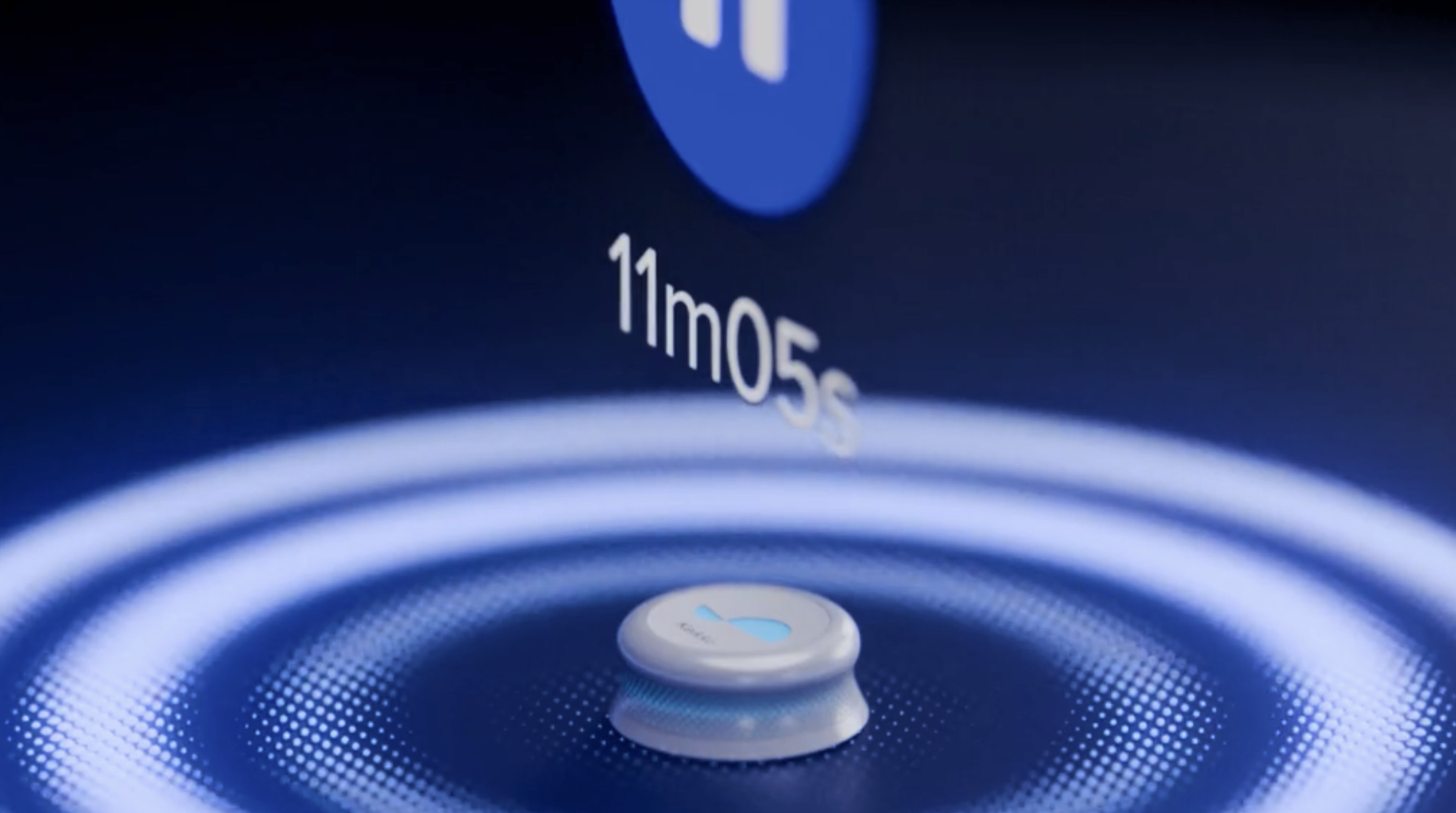
At the center of that approach is Keikku's ambient microphone capture. Rather than relying on whatever low-fidelity audio a generic device happens to pick up, Keikku is engineered to capture clean, high-fidelity sound from the clinical encounter, giving every downstream engine the best possible signal to reason over. This is the pinnacle of the same logic that radiology and ECG AI have been forced to learn the hard way: solve the problem at the source and you prevent the errors that no amount of downstream cleverness can fully undo.
The payoff compounds across the whole platform. The Scribe | AI Notes produces more faithful documentation because it is transcribing clean speech rather than guessing through noise. The Diagnostics AI, including Murmur Detection that analyzes heart and lung sounds, works from a high-quality acoustic capture rather than a degraded one, which matters enormously when the signal of interest is a subtle murmur or a faint crackle. And the Clinical Evidence engine reasons over context that was captured accurately in the first place. Better capture does not improve one feature. It raises the ceiling on all of them at once.
The advantage hiding in plain sound
The industry's attention stays fixed on models, but the durable advantage in medical AI lives one step earlier, at the moment of capture. Radiology learned it through motion artifacts. Cardiology learned it through signal noise. Ambient documentation is learning it through audio quality. The lesson is always the same: the system is only as good as the data it was given, and the data is only as good as the moment it was captured.
Keikku is built on that lesson rather than around it. By making world-class ambient capture the foundation of the platform, Keikku ensures that every AI engine downstream is working from the best possible information. Great medical AI does not begin with a great model. It begins with great data, and great data begins at capture.
Sources
- Kjeldsen MS, et al. "Motion artifacts and image quality in stroke MRI: associated factors and impact on AI and human diagnostic accuracy." 2025. ncbi.nlm.nih.gov/pmc/articles/PMC12712086
- "The Evolving Role of AI in Radiology." Radsource, 2024. radsource.us/ai-in-radiology
- "A Systematic Review of Medical Image Quality Assessment." 2025. ncbi.nlm.nih.gov/pmc/articles/PMC12027808
- Ansari Y, et al. "Deep learning for ECG Arrhythmia detection and classification: an overview of progress for period 2017 to 2023." Frontiers in Physiology, 2023. frontiersin.org
- Topaz M, et al. "Beyond human ears: navigating the uncharted risks of AI scribes in clinical practice." npj Digital Medicine, 2025. nature.com/articles/s41746-025-01895-6