By Jhonatan Bringas Dimitriades, MD, CEO and co-founder, Lapsi Health
There is a quiet new burden spreading through medicine. Walk into any hospital and you will find clinicians doing something they were never trained to do and never signed up for: trying to become AI experts.
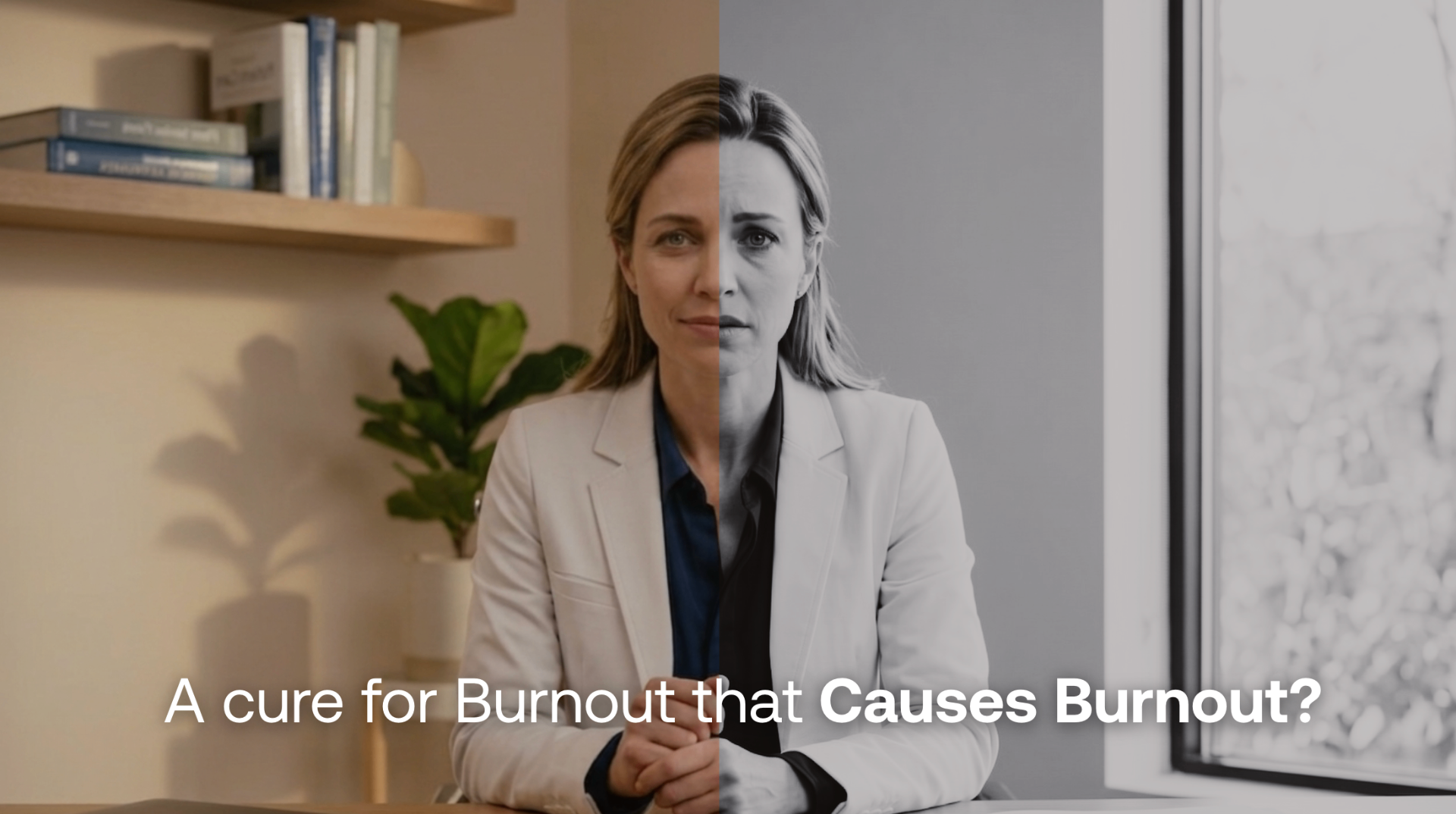
They are reading about large language models between shifts. They are asking each other how to assess an algorithm, what the differences are between hallucination and confabulation, which cloud services and which LLM models are being pulled for inference in the RAG architectures, and more. They are attending webinars on machine learning fundamentals after twelve-hour days. The technology that was promised as the cure for burnout is generating a new kind of it: cognitive burnout, trust burnout, the exhausting feeling that you must personally verify a technology you were never educated to verify.
Let me be fair, because fairness matters here. What these clinicians are doing is admirable. For the doctors who genuinely want engineer-level knowledge of AI, who dive into the architecture and the mathematics out of curiosity and ambition, I have nothing but admiration. Medicine needs those hybrid minds, and they will help shape this field. But that path should be a choice, not a requirement. Wanting to understand AI deeply is a passion. Feeling forced to understand it just to practice safely is a burden. And right now, far too many clinicians are not choosing this. They are carrying it.
We should stop and ask the obvious question. Why do doctors feel they need to know how AI works?
The answer is uncomfortable but simple. Because in most of the world, clinical AI is not meaningfully regulated. And when a tool arrives without external validation, the burden of trust falls on the individual user. Every clinician becomes their own regulatory agency, their own notified body, their own FDA. That is not empowerment. That is burdening.
We Have a Solution for This, and It Is Applied in Medicine Every Day
Medicine faces this situation all the time, and it has a proven methodology.
First, there is Pharma. Consider acetaminophen. It is one of the most widely used drugs on the planet, and almost no prescribing clinician could walk you through its synthesis pathway or its full biochemical mechanism from memory. They do not need to. What they know is the clinical layer: indications, dosing, contraindications, hepatotoxicity thresholds, interactions. They know when to use it, for whom, and when not to.
Why is that enough? Because the matter of what it is and how it works was vetted before the drug ever reached clinician hands. Regulation and validation did the vetting. The manufacturer carried the burden of proof. The clinician received the conclusion of that process in a usable form: a label.
Then, there are medical devices. Consider the MRI machine. It is an extraordinarily complex piece of engineering, superconducting magnets, radiofrequency coils, gradient systems. No radiologist is expected to understand the magnetic field physics inside it. Radiologists master something entirely different: when to order an MRI, how to interpret one, when to prioritize it over CT for a given clinical question. The physics belongs to the manufacturer. The medicine belongs to the doctor.
Why does no one feel burdened by this division of labor? Because MRIs are regulated as medical devices. The certification is the trust. The clinician is freed to focus on the only question that should ever be theirs: application.
This is the pattern that built modern medicine. Manufacturers prove. Regulators verify. Clinicians apply. Every layer does its job, and no layer is asked to do another layer's job.
Clinical AI broke this pattern. It arrived in hospitals without the middle layer, and the entire weight of verification collapsed onto the person with the least time for actual work and the highest burnout rate: the clinician.
Let's Look at the Learnings from Europe
Under the EU's medical device framework and the AI Act, clinical AI is not treated as neutral software. Under MDR Rule 11, software intended for a medical purpose is a medical device, full stop. It must be classified, evaluated, documented, and certified before it touches a patient, with classification starting from Class I and moving upward depending entirely on intended use.
Some would call this friction. I might disagree. Europe did not decide to slow AI down. Europe decided that the burden of proof belongs to the builder, exactly as it does for drugs and devices.
In this region, when a clinician uses a certified clinical AI tool, they do not go through this burdening pathway. They have knowledge of the certification and they proceed to apply it to their workflow. I personally like that.
Why Is Carrying CE Certification Important to the US Clinical Professional?
Clinicians in the USA can already place their trust in companies that carry this particular regulatory approval: the CE Mark. There is a handful of them in the market today, from AI scribes to clinical decision support tools, that have taken their technology through a formal medical device pathway. For the clinician, that handful represents something valuable: tools where the vetting was done before the tool arrived, where trust does not have to be built from scratch at the bedside.
At Keikku, we chose to be part of that handful. We are scaling in the United States with our AI Platform, and, in some places, with our FDA-cleared Hardware. But in the case of our Platform (Scribe + Coding Intelligence + Clinical Decision Support) in particular, much of what Europe demands is not required in the US market.
So here is the question we asked ourselves: if it is not required, should we carry it and promote it anyway? The answer is 100% yes.
We bring to the US an AI evaluated and documented under the European medical device framework according to its intended use, supported by structured clinical evaluation designed to those standards. The reason is not marketing. The reason is the clinician, we want them to be unburdened.
Every certification we carry is a question a clinician does not have to ask.
Clinicians have enough on their plate. They are managing patient loads, documentation demands, staffing shortages, and the emotional weight of the work itself. The last thing they need is an unpaid second career in AI auditing.
The Future Is Not a New Era of Doctor AI Engineers
The future of clinical AI is not a generation of clinicians who are also versed in machine learning architectures, LLM model nuances, and cloud computing engineering. It is a generation of clinicians that have learned how to apply trusted AI tools, from developers that carry the burden of proof, into their clinical practices with safety, responsibility, and professionalism. An unburdened new clinician generation.